- October 8, 2026
- Dogs, Pet Dental Care, Pet Health & Wellness
Dog teeth cleaning: what happens at a dental visit
A dog teeth cleaning at the veterinary hospital looks a lot like your own visit to the dentist, with one big difference: your dog sleeps through it under general anesthesia. This guide walks through what happens from drop-off to pickup, what dental x-rays show that a look in the mouth cannot, and why an anesthesia-free cleaning is not the shortcut it appears to be.
Key takeaways
- By age three, most dogs and cats already have some form of periodontal disease, and most of the damage happens below the gumline, where you cannot see it.
- A complete cleaning includes an exam, dental x-rays, scaling above and below the gumline, probing and polishing. Doing all of that properly requires general anesthesia.
- Anesthesia-free cleanings remove only the tartar you can see. AAHA calls them not acceptable because of safety, efficacy and ethical concerns.
- Blood work comes before anesthesia, and most dogs go home the same day.
- Regular brushing at home is the single most effective thing you can do between cleanings.
Dog dental disease starts where you cannot see it
Dental disease begins with plaque, a film of bacteria that collects on the teeth and under the gumline and hardens into tartar. The AVMA’s guide to pet dental care explains that tartar above the gumline is often easy to see and remove, but plaque and tartar below the gumline set the stage for infection and for damage to the jawbone and the tissues that hold each tooth in place. Periodontal disease is the most common dental condition in dogs and cats.
It also starts early. According to AAHA’s overview of dog and cat dental disease, most dogs and cats already have some form of periodontal disease by age three. Left untreated, it can lead to painful, bleeding gums, loose or missing teeth and tooth root abscesses. Once the infection reaches the bloodstream, AAHA notes, it can damage the heart, kidneys and liver.
Most dogs give you very few clues. Pets are experts at hiding pain, so many show no signs until the disease is advanced. When signs do appear, AAHA lists these among them:
- Bad breath or excessive drooling
- Yellow or brown teeth, or red, swollen gums
- Blood on chew toys
- Tilting the head to eat, chewing on one side of the mouth, or dropping food
- Swelling of the face
The AVMA recommends a veterinary check of your dog’s teeth and gums at least once a year, and sooner if you notice any of these changes. We explain the condition itself in our article on periodontal disease.
What happens during a dog teeth cleaning, step by step
A professional cleaning is really two jobs at once: a full examination of the mouth and a cleaning of every tooth surface, including the parts hidden under the gums. AAHA describes the visit in roughly this order, and each step depends on the one before it.
- An exam while your dog is awake. The veterinarian looks over the mouth for signs of dental disease and anything else that seems abnormal.
- Blood work. Because the cleaning requires anesthesia, blood tests come first to look for underlying health problems that would complicate the procedure, including how well the kidneys and liver are working.
- Anesthesia and monitoring. The team places an intravenous (IV) catheter, gives medication to help your dog relax, and then starts anesthesia. A breathing tube delivers oxygen and anesthetic gas and protects the airway and lungs. AAHA’s guide to anesthesia and dental cleaning says a dedicated team member watches heart rate, oxygen saturation, blood pressure, temperature and breathing throughout.
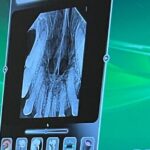
- Dental x-rays. Images show the tooth roots and the bone beneath the gumline.
- Scaling. Specialized dental instruments remove plaque and tartar from the tooth surfaces above and below the gumline.
- Polishing. Scaling leaves tiny abrasions on the tooth surface. Polishing smooths them so bacteria have a harder time sticking.
- Probing. The team checks around each tooth for abnormally deep areas and pockets.
- Treatment of problem teeth. A tooth too damaged to save may be extracted while your dog is already under anesthesia, and antibiotics may be prescribed when the disease is extensive.
- Supervised recovery. A team member stays with your dog until vital signs are back to normal and your dog is resting comfortably.
Most dogs go home the same day, though the AVMA notes they may seem a little groggy for the rest of the day. If you want to know more about step two, we cover why pre-anesthetic blood work matters in a separate article.
What dental x-rays show
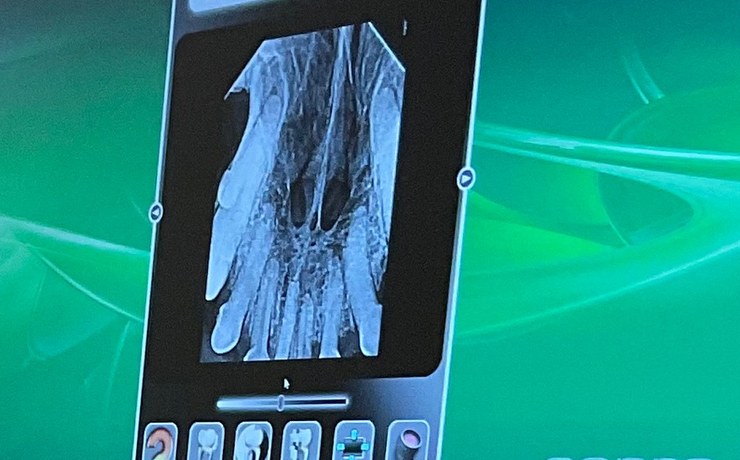
Looking in the mouth shows you the crowns and the gum line, and not much more. AAHA notes that more than half of a tooth’s structure sits below the gumline and can be seen only on x-rays. Bone loss around a root, root resorption and abscess formation all indicate a diseased tooth, and AAHA’s anesthesia guide says those problems are easily missed without an x-ray.
That is why the x-rays come before any decisions about treatment. Because so much disease hides below the gumline, a tooth that looks healthy from the outside can still be diseased, and the images are how the veterinarian decides which teeth need attention.
Dental x-rays also need a patient who holds perfectly still. The AVMA explains that good images are unlikely without heavy sedation or anesthesia, which is one more reason the cleaning and the x-rays happen during the same visit. Our facility includes digital dental x-rays and modern dental and surgical suites, and you can see the space on our facility page.
Why the cleaning needs anesthesia
Many owners hesitate at the word anesthesia. In fact, AAHA’s 2019 dental care guidelines name fear of anesthesia as the most commonly cited reason pet owners skip proper dental procedures. It helps to know what anesthesia makes possible.
Think about your own cleaning. You understand why someone is working in your mouth with sharp instruments, so you hold still. A dog does not. The AVMA puts it plainly: a pet does not understand the benefit of dental procedures and reacts by moving, trying to escape, or even biting. With anesthesia, the cleaning is less stressful and less painful for your dog, it is more thorough, and nobody is hurt by a sudden movement near the instruments.
The cleaning below the gumline is the part that treats disease. The AAHA guidelines on nonanesthetic dentistry describe cleaning beneath the gums as uncomfortable and at times painful for the patient, and they call removing tartar above the gumline alone purely cosmetic and ineffective at treating disease.
As for safety, the AVMA says anesthesia will always carry some risk, but it is safer now than ever, and the risks are very low and far outweighed by the benefits. AAHA’s guidelines say the risks for healthy or minimally compromised patients are very low when appropriately trained people provide the anesthesia. If your dog has a heart, kidney or other health condition, ask how the plan will be adjusted for it.
About anesthesia-free dog teeth cleaning
You may see advertisements for cleanings done while the dog is awake. AAHA says anesthesia-free dentistry is not acceptable because of safety, efficacy and ethical concerns, and that it removes only the tartar visible above the gumline. The Merck Veterinary Manual adds that cleaning an awake animal improves the appearance of the teeth but does not improve periodontal health, so an owner may believe the problem has been treated while the disease continues below the gums. The AVMA reports that the American Veterinary Dental College does not recommend these cleanings either.
Getting your dog ready, and keeping teeth clean afterward
A little planning makes the day easier for both of you:
- Follow the eating and drinking instructions you are given for the night before and the morning of the visit.
- Bring a list of every medication and supplement your dog takes, and ask whether to give the usual doses that morning.
- Ask how the team will reach you during the procedure if the x-rays show a tooth that needs to come out.
- Plan a quiet evening at home, since your dog may be sleepy after anesthesia.
Your veterinarian will give you instructions for care after anesthesia and for ongoing dental care at home. That home care matters, because a cleaning resets the clock rather than stopping it. AAHA notes that plaque starts to build up only hours after a pet eats, which is why a professional cleaning is not enough on its own.
The AVMA calls regular brushing the single most effective thing you can do to keep your dog’s teeth healthy between cleanings. Daily brushing is best, and brushing several times a week can still help. AAHA’s tips for home care:
- Use a pet toothbrush with soft bristles and a toothpaste made for pets. Never use human toothpaste, which is often toxic to pets.
- Choose dental chews and treats that carry the Veterinary Oral Health Council seal of approval.
- Ask your veterinarian whether a dental diet or a water additive would help your dog.
Not every product marketed for dental health works, the AVMA cautions, so it is worth asking before you buy. For a closer look at brushing and chews, read what you can do at home to keep your pet’s teeth clean.
Quick answers
How often does a dog need a teeth cleaning?
There is no single schedule that fits every dog. The AVMA recommends a veterinary check of your dog’s teeth and gums at least once a year. The Merck Veterinary Manual’s guide for dog owners notes that small-breed dogs usually have more problems with periodontitis than large-breed dogs, and that brushing at home and regular cleanings by your veterinarian are both important. At the yearly check, ask how often your dog needs a cleaning. We also explain why and how often to have your pet’s teeth cleaned.
Is anesthesia safe for dog teeth cleaning?
No anesthesia is entirely free of risk, but the AVMA says it is safer now than ever and that the risks are very low and far outweighed by the benefits. Blood work beforehand, an IV catheter, a breathing tube and a team member watching vital signs from start to finish are all part of keeping it that way. If your dog has an ongoing health condition, ask how the anesthetic plan will account for it.
Is cat dental cleaning the same?
Largely, yes. AAHA’s dental care guidelines cover both dogs and cats, and a cat’s professional cleaning follows the same exam, x-rays, scaling, polishing and probing under anesthesia. The AVMA’s advice to have teeth and gums checked at least once a year applies to cats too. At home, the AVMA says cats can be more resistant to brushing than dogs, so patience and gradual training are important.
Where can I find dog teeth cleaning near me in Parma?
Our hospital is at 6270 State Road in Parma. Our care includes wellness exams, vaccinations, diagnostics, dental care and surgery at every stage of your pet’s life, and our facility includes digital dental x-rays. To start, call 440.845.7141 and ask to schedule a visit so the veterinarian can examine your dog’s teeth and gums.
Book a dental visit in Parma
If your dog’s breath has changed, or it has been more than a year since anyone looked closely at those teeth, an exam is the place to start. Our hospital at 6270 State Road in Parma is open Monday to Friday, 7:30am to 5:30pm, and is closed Saturday and Sunday. Call us at 440.845.7141 to book your dog’s visit. Dental care is part of our wellness care.