- November 3, 2026
- Dogs, Pet Health & Wellness
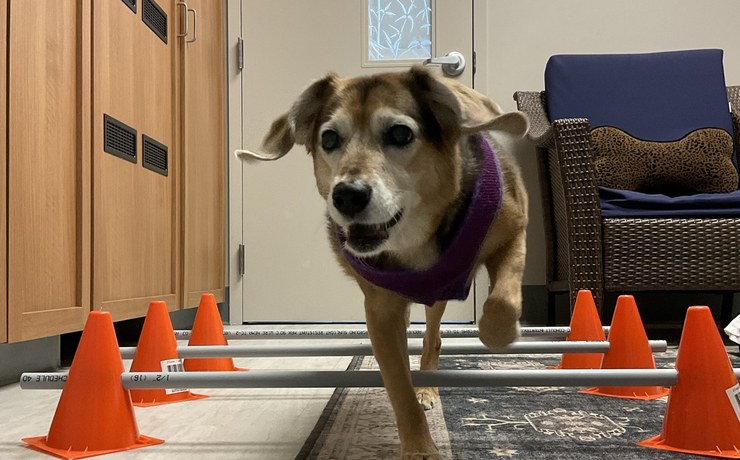
When the first hard frost reaches Parma, some dogs slow down on the stairs, take longer to get up in the morning or stop meeting you at the door. Those changes are easy to put down to age or the weather, but they can be signs of arthritis. This guide covers the early signs, how a veterinarian builds a treatment plan, how rehab helps and what you can change at home and on winter walks.
Key takeaways
- Cold weather may make arthritis worse, and icy ground makes slips and falls more likely for a stiff dog.
- The early signs are quiet: slowness to rise after rest, trouble with stairs, and less jumping or play.
- Arthritis care works best with several measures at once, started early, rather than a single pill.
- Physical rehabilitation can help with pain, mobility and balance.
- Never give your dog a human pain reliever. Ibuprofen and naproxen can cause life-threatening harm in pets.
Why cold weather is hard on arthritic dogs
The AVMA’s cold weather safety guidance notes that cold weather may worsen some medical conditions such as arthritis, and that arthritic and elderly pets may have more difficulty walking on snow and ice and may be more prone to slipping and falling. It also advises that you will probably need to shorten your dog’s walks in very cold weather.
A Northeast Ohio winter adds a few more hazards. The AVMA warns that a sudden lameness during a walk may be due to an injury or to ice building up between the toes, and that de-icing products and antifreeze picked up on the feet, legs and belly can poison a dog who licks them off. For a dog who already moves carefully, each of these is one more reason to keep winter outings short and well planned. Our older post on how long to leave your pet out in cold weather covers the basics of cold exposure.
Early signs of arthritis in dogs
Osteoarthritis is one of the most common chronic, painful conditions recognized in dogs and cats, according to the Merck Veterinary Manual’s professional chapter on osteoarthritis in dogs and cats. Merck lists the common signs as slowness to rise, especially after extended rest; difficulty going up or down stairs; and limited jumping or playing. It adds that a limp may be less obvious than you would expect, even when the disease is advanced.
It is not only an old-dog problem. Merck cites research finding that up to 40 percent of dogs aged 8 months to 4 years have osteoarthritis, while signs are generally not identified until dogs are 5 to 13 years old. AAHA’s Trends magazine reported on a small University of Tennessee study in which 18 of 30 dogs brought in for a routine dental cleaning, with no known history of joint disease, had X-ray evidence of osteoarthritis in one or more joints. One of the study’s authors told the magazine that most owners might not understand the signs of early osteoarthritis and attribute some of the changes to old age or slowing down.
Pain can change behavior too. Ohio State’s Indoor Pet Initiative explains that pain from joint changes in older dogs may lead to less activity and changes in how a dog interacts with the family, and that aggression when a dog is hugged, lifted or moved off furniture is not an uncommon result of pain. A dog who suddenly growls when picked up deserves an exam, not a scolding.
What your veterinarian will check
The AVMA recommends that every pet be examined by a veterinarian at least once a year, and calls the start of cold weather as good a time as any. For a dog with suspected arthritis, Merck describes exam findings such as joint swelling, muscle loss and resistance when a joint is moved through its range of motion, along with the changes X-rays can show.
You can help before the visit. The 2023 AAHA Senior Care Guidelines point out that owners often see changes in a senior pet as normal aging when they may be the result of chronic pain. The guidelines suggest taking videos of your pet moving around the house and yard, which help both you and your veterinarian see changes in movement and track how well treatment is working. A short clip of your dog getting up from bed or climbing the back steps is worth bringing to the appointment.
Treatment: a plan with several parts
AAHA’s guidelines say that treatment for pain and mobility must be integrative and multimodal, and that addressing these issues early in the course of the disease improves the outcome. In practice, that means several measures working together.
Weight. Merck calls weight optimization the primary preventive method to slow the development of osteoarthritis in dogs, and says that even very modest weight loss is well established to improve function in overweight dogs with the disease.
Exercise. Merck lists regular, controlled exercise as part of treatment. Its owner guide to osteoarthritis also recommends exercise on soft surfaces and warm compresses on the affected joints.
Medication. Merck describes nonsteroidal anti-inflammatory drugs, or NSAIDs, as the most predictably effective treatment for osteoarthritis. The owner guide adds that long-term use can sometimes cause stomach and intestinal problems such as loss of appetite and vomiting, and that corticosteroids are usually given only for a short period. For dogs with moderate to severe signs, Merck notes that bedinvetmab, a monthly injection that targets nerve growth factor, is another option. Your veterinarian will choose based on your dog’s signs, age and overall health.
Diet and supplements. Merck reports that diets rich in the omega-3 fatty acid EPA have been shown to improve gait and mobility in dogs. Glucosamine and chondroitin are among the most common supplements given for arthritis, but a systematic review cited by Merck found no evidence of a beneficial effect and concluded that the evidence did not support their use for arthritis pain in dogs and cats.
Surgery. For some joints and some dogs, surgery such as joint fusion or joint replacement is an option. Merck notes that the outlook depends on where the joint disease is and how severe it is.
Do not reach for your own medicine cabinet. The ASPCA Animal Poison Control Center warns that common household medicines such as ibuprofen and naproxen can cause life-threatening problems in pets, including stomach ulcers and kidney failure. Pain relievers made for people are not a safe stand-in for a prescription. If your dog has swallowed one, call your veterinarian right away or the ASPCA’s poison line at (888) 426-4435.
How rehab helps a dog with arthritis
AAHA’s guidelines say that senior pets with chronic musculoskeletal disease may benefit from physical rehabilitation, which they call an excellent option for assisting with pain management and increasing mobility and balance. They list therapies such as exercise therapy, hydrotherapy, manual therapy and photobiomodulation therapy. Merck’s professional chapter also lists therapeutic laser and household accommodations among the nonpharmacological options for dogs.
Our hospital offers physical rehabilitation for arthritis, injury and recovery after surgery, with plans built to rebuild strength and mobility. Our rehab C.A.R.E. service works by utilizing laser and massage therapy, range of motion exercises, wheelchair fittings and support. The C.A.R.E. services page describes laser therapy in more detail. For larger dogs, we have two mechanical lift tables, so they can be examined without being lifted. We are also Walkin’ Pets Certified.
Make home and winter walks easier
Small changes at home take strain off sore joints every day. Drawing on the AAHA guidelines and the AVMA’s winter advice, here is a simple checklist:
- Add traction. AAHA suggests rugs or yoga mats for better footing on slick floors, and toe grips, boots or socks for foot stability.
- Use ramps. AAHA lists ramps among the home changes that can help a pet with limited mobility.
- Help with lifting. AAHA recommends a fitted, padded harness to help you lift a larger dog.
- Raise the bowls and choose the bed. AAHA lists elevated food and water bowls and an appropriate bed among useful changes. The AVMA adds that pets like to choose a warmer or cooler place to sleep, so offer more than one spot.
- Keep winter walks short. The AVMA suggests shorter walks in very cold weather. Check the paws for cracked or bleeding pads, and make sure any booties fit properly.
- Wipe down after every walk. The AVMA advises wiping or washing the feet, legs and belly to remove de-icers and other chemicals.
Does cold weather make arthritis worse in dogs?
It can. The AVMA notes that cold weather may worsen some medical conditions such as arthritis, and that arthritic and elderly pets may have more difficulty on snow and ice. The AVMA suggests shorter walks in very cold weather, and the start of winter is a good time for a checkup.
Can I give my dog ibuprofen for arthritis pain?
No. The ASPCA lists ibuprofen and naproxen among common household medicines that can cause life-threatening problems in pets, including stomach ulcers and kidney failure. Your veterinarian can prescribe a pain medication made for dogs and check that it suits your dog’s overall health.
Do joint supplements like glucosamine help dogs?
The evidence is weak. A systematic review and meta-analysis cited by the Merck Veterinary Manual found no evidence of a beneficial effect from glucosamine and chondroitin for arthritis pain. Merck does report that diets rich in the omega-3 fatty acid EPA have improved gait and mobility in dogs. Ask your veterinarian before adding anything new.
Does your hospital fit dog wheelchairs?
Yes. Our rehab services include wheelchair fittings and support, along with laser and massage therapy and range of motion exercises, and we are Walkin’ Pets Certified. Whether a wheelchair, a harness or home changes are the right next step is a decision to make with your veterinarian after an exam.
Plan your dog's arthritis care this winter
If your dog is slower to rise, hesitant on the stairs or less eager to play, an exam now gives you a plan before the coldest months. For older dogs with several health problems, our quality of life scale can help you and your veterinarian talk through how your dog is doing day to day.
Our hospital in Parma is open Monday to Friday from 7:30am to 5:30pm and is closed Saturday and Sunday. Call 440.845.7141 or schedule a visit to talk about your dog’s joints, treatment and rehab.