- October 16, 2026
- Cats, Pet Boarding & Daycare
Cat boarding: how to make your cat’s stay less stressful
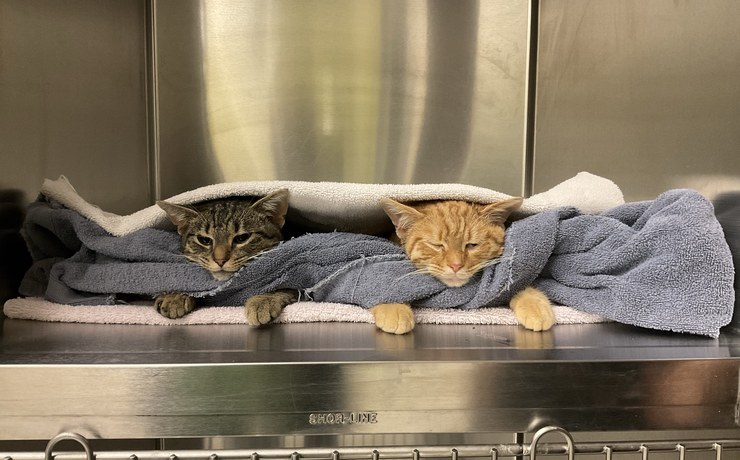
Cats are creatures of habit, and a boarding stay changes the room, the smells, the people and the schedule at once. A little planning goes a long way. This guide covers how to choose cat boarding near you, how to get your cat ready for the carrier, what to bring from home and what to watch for during and after the stay.
Key takeaways
- Cats value predictability and a familiar place, and stress can affect their health as well as their mood.
- Look for cat boarding that gives your cat a private space and keeps the routine close to what it is at home.
- Start carrier practice well before the trip, so the carrier stops meaning “something bad is about to happen.”
- Bring your cat’s usual food, any medication labeled with dose and timing, and a familiar blanket or toy.
- A cat straining in the litter box and passing little or no urine is an emergency, during a stay or after it.
Is boarding stressful for cats?
It can be, and it helps to know why. AAHA describes cats as a species that values predictability, control, and environmental familiarity. Ohio State’s Indoor Pet Initiative puts it more plainly: cats are creatures of habit, and they depend on us to keep their surroundings stable and safe. Its researchers add that some cats are unusually sensitive to their surroundings and may respond to life stressors by becoming uncomfortable, nervous or fearful, and that particularly susceptible cats may even get sick.
Age matters too. Cornell’s Feline Health Center notes that older cats may be more sensitive to changes because their ability to adapt to unfamiliar situations diminishes with age, and it says special provisions should be made for older cats that must be boarded.
Stress is not only about mood. Cornell reports that up to 97% of cats are exposed to feline herpes virus in their lifetime, that the virus causes a lifelong infection in up to 80% of exposed cats, and that up to 45% of those cats will periodically shed the virus, usually when stressed. Cornell also lists changes in routine among the stressful factors that may increase a cat’s risk of lower urinary tract signs. That is why the best cat boarding keeps as much of the routine the same as it can.
How to choose cat boarding near you
Visit before you book. AAHA’s boarding tips suggest seeing a facility in person to make sure it is clean, secure and equipped with what your pet needs, such as a cozy nook for your cat. While you are there, look for a few things that matter more to a cat than to a dog:
- A space of their own. Cornell lists living in a multi-cat household among the stressful factors that can affect a cat’s urinary health.
- A separate, clean litter area. Cornell advises giving cats a safe, clean area in which to urinate.
- Staff who will follow your notes. Feeding times and medication should match what happens at home.
At our resort, your cat will be able to stay with us in their own kitty condo with separate litter box area. Our resort tour shows the condos, and our guests must meet our standards of practice for both health and temperament before they stay with us at the resort.
Vaccines and health before the stay
Book a veterinary visit before the trip if your cat is due for anything. Cornell recommends vaccination against feline herpes for all cats, noting that current vaccines do not prevent infection in every case but significantly decrease the severity of disease and the shedding of virus. It recommends vaccination against feline calicivirus for all healthy cats. Our article on what vaccines your cat should be current on explains the usual set, and you can ask us which vaccines the resort requires when you book.
Please request all boarding stays at least 2 weeks in advance. If you need a stay sooner, call 440.845.7141 for an immediate response.
If your cat takes medicine, plan for it from the start. We can provide the administration of oral or topical medications at an additional cost. Cats and dogs who have more extensive medical needs, such as injections, dental care, wellness blood testing, vaccines or exams, can easily be accommodated at our full service facility.
Get your cat ready for the carrier
For many cats, the stress of a trip starts at home. AAHA notes that the carrier itself is often a powerful trigger for fear, and that when carriers only appear just before a veterinary visit, cats learn to associate them with confinement and loss of control. The good news, in AAHA’s words, is that older cats can still learn to feel safe in a carrier. If there is more than one cat in the household, each cat should have their own carrier.
Ohio State’s advice on traveling with your cat follows the same idea: get your cat used to the carrier well before your date of departure, leave the open carrier sitting out so she can explore it on her own, and place catnip or treats inside. For long trips, it suggests asking your veterinarian about medication to calm your cat. Our article on carrier training for a calmer vet visit walks through the steps in more detail.
A two-week plan for a calmer stay
- Two weeks or more before. Request the stay and check your cat’s vaccine dates. Book a veterinary visit if anything is due.
- The same day. Put the carrier out where your cat already likes to rest, door open, with a soft blanket inside.
- Every day after that. Drop a treat or a little catnip in the carrier and let your cat go in and out on their own terms.
- A few days before. Write down meal times, portions, litter habits and any medication schedule.
- The night before. Pack the usual food with a little extra, the labeled medication and one familiar blanket or toy.
- Drop-off. Bring your cat in the carrier, hand over your notes and keep the goodbye quiet.
What to bring from home
Familiar food and familiar smells do the most work. AAHA recommends packing your pet’s usual food and treats, enough for the whole stay plus a little extra, along with any medication clearly labeled with dosage instructions and administration times. Cornell adds that having a familiar object, such as a blanket or toy, may prevent an older cat from becoming too distraught in a strange environment.
Keep the diet the same. Cornell points out that changes in food can bring back bladder inflammation in some cats, and recommends that the diet and feeding schedule of a cat with that history remain consistent. If your cat eats a prescription diet, bring enough of it and say so on your notes.
A cat that strains in the litter box and passes little or no urine needs a veterinarian now. Cornell calls a urethral obstruction an absolute emergency requiring immediate veterinary treatment, and notes that male cats are at greater risk. Signs include straining, frequent attempts to urinate, producing little if any urine and crying out in pain. Call your veterinarian on the way, and after hours go to a 24-hour emergency hospital.
Checking in, and coming home
With our 24/7 webcam system, you can check in on your cat at any time from the webcam page.
When your cat comes home, keep the first few days quiet and predictable. Cornell’s guidance on loving care for older cats notes that sticking to normal routines reassures them. The same page says any change in behavior or health warrants a visit to your veterinarian without delay, so call your veterinarian if your cat keeps hiding, misses the litter box, or sleeps or eats differently once home. If you also have a dog to plan for, our guide to preparing for a dog’s first boarding stay covers the canine side.
Is boarding stressful for cats?
It can be. Cats are creatures of habit, and AAHA describes them as a species that values predictability, control and environmental familiarity. Keeping the food, the schedule and a few familiar objects the same, in a private space with a separate litter area, keeps the change as small as possible. Older cats may need extra care, since their ability to adapt diminishes with age.
What is a kitty condo?
It is the cat’s own room at our resort. Your cat will be able to stay with us in their own kitty condo with separate litter box area. Our resort tour shows the condos, and you are welcome to ask about them when you request a stay.
Should I bring my cat's own food?
Yes. AAHA recommends packing your pet’s usual food and treats for the whole stay, plus a little extra in case of unforeseen circumstances. Cornell notes that changes in food can trigger a recurrence of bladder inflammation in some cats, so keeping the diet and feeding schedule the same is one of the simplest ways to make the stay easier.
How early should I book cat boarding?
Please request all boarding stays at least 2 weeks in advance. If you need a stay sooner, call 440.845.7141 for an immediate response. Give yourself extra time if your cat needs a vaccine or a checkup first, and start carrier practice as soon as the dates are set.
Plan your cat's stay with us
A calm stay starts with a carrier your cat trusts, the usual food and a plan that keeps the routine close to home. When you are ready, send us your dates.
Our resort in Parma is open Monday to Saturday from 8:00am to 7:00pm and Sunday from 10:00am to 4:00pm. Call us at 440.845.7141, or start on our new guest page if your cat has not stayed with us before.