Dog Dental Cleaning in Parma, OH: Professional Dental Care
Bad breath is easy to blame on dinner, but it is often the first sign of dental disease, one of the most common health problems in adult dogs.
If you're searching for dog dental cleaning in Parma, Bartels Busack Pet Hospital provides professional dental exams and cleanings at our AAHA-accredited hospital with digital dental X-rays and a veterinary team that takes your questions about anesthesia seriously. We care for cats' teeth, too!
Why Professional Dog Dental Cleanings Matter
A professional cleaning does far more than freshen breath. Plaque hardens into tartar that brushing can’t remove, and the bacteria in it inflame the gums and eventually attack the bone that anchors your pet’s teeth.
Dental disease is an active infection in the mouth, and bacteria from infected gums can enter the bloodstream and may harm organs such as the heart, liver, and kidneys. It is also painful, though many dogs suffer in silence and keep eating normally. Cleaning below the gum line, where disease starts, is something only a professional dental procedure can do.
Signs Your Dog Needs a Dental Cleaning
Watch for these warning signs:
- Bad breath or drooling
- Yellow or brown tartar on the teeth
- Red, swollen, or bleeding gums
- Chewing on one side, dropping food, or pain while eating
- Pawing at the mouth or pulling away when touched
- Loose or broken teeth
Any of these is a reason to schedule a dental exam. Many pets show no signs at all until disease is advanced, so a yearly oral exam matters even when everything seems fine.
What Happens During a Dog Dental Cleaning
A thorough dental cleaning is more than scraping tartar. Learn more about what happens during a dog teeth cleaning.
Your Dog's Visit Typically Includes:
- A pre-anesthetic exam and blood work to check organ function
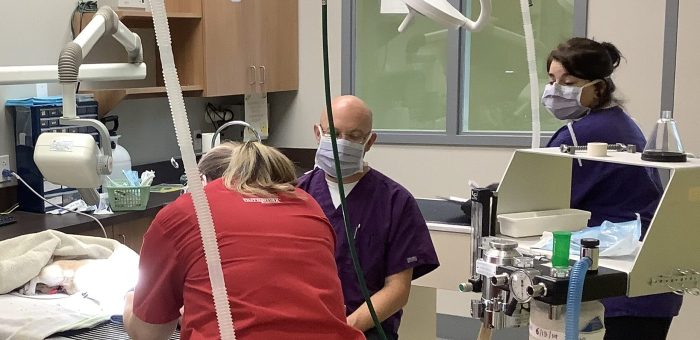
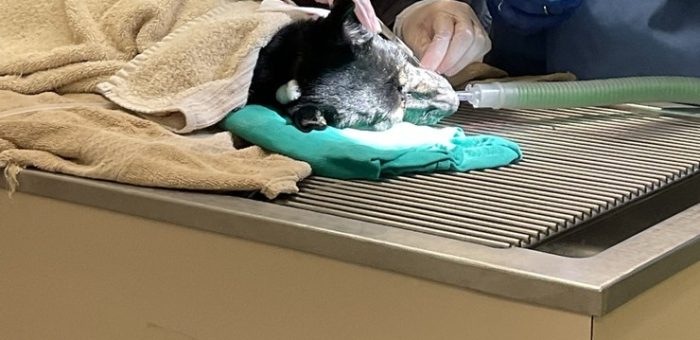
- General anesthesia, with monitoring throughout
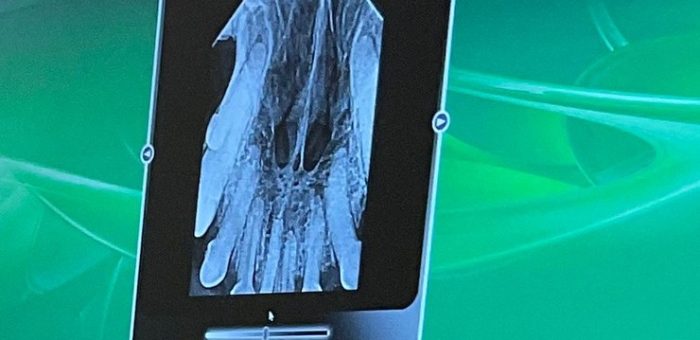
- Digital dental X-rays to find disease under the gum line that can't be seen on the surface
- Removal of tartar above and below the gum line, followed by polishing to smooth tooth surfaces and slow new buildup
- Recovery in our quiet hospital kennel, with home-care instructions when you pick up
If the exam or X-rays reveal a diseased or damaged tooth, your veterinarian will talk with you about treatment options before moving forward.
Dedicated to Nurturing The Human-Animal Bond
Our doctors and team will do everything possible to provide quality medical and surgical care for our patients in a manner that is friendly, compassionate, educational and ethical. We will be a responsible and respected citizen of the community.
Our Dental Equipment
Doing dentistry properly takes the right tools. All 7 of our exam rooms have computers that display digital X-rays and digital dental X-rays, and our digital radiography lets us take fewer images with greater accuracy and speed.
Our central treatment area can handle any medical, surgical, or dental case, branching off into radiology, surgery, or dentistry, so if X-rays turn up a problem, it can be addressed right here. Take a tour of our hospital to see the space.
Is Anesthesia Safe for Dog Dental Cleanings?
Anesthesia is the number one worry we hear, and it’s a fair one. Every anesthetic carries some risk, but we use the safest anesthetics available and screen every patient first.
Pre-anesthetic blood work checks the liver, kidneys, heart, and lungs so we can choose the right drugs and catch hidden problems before the procedure. Anesthesia, pain management, and dentistry are all evaluated under AAHA’s accreditation standards, which our hospital has met for more than 35 years.
Age alone isn’t a reason to skip a cleaning. Older dogs often have the most dental disease, and a careful exam and blood work help us plan a safe anesthetic for each dog.
What about anesthesia-free cleaning? Scraping visible tartar without anesthesia can make teeth look cleaner, but it can’t reach below the gum line, can’t include X-rays, and can’t be done safely on a dog who won’t hold still, so disease keeps progressing underneath. We recommend professional cleanings under anesthesia.
Dog Dental Care at Home Between Cleanings
Home care makes professional cleanings more effective. Brushing at least twice a week, ideally daily, with a veterinary toothpaste (never human toothpaste) removes plaque before it hardens.
Crunchy food, veterinary oral gels, and dental treats can help, though none replace brushing. Our team can show you how to get started, and our guide to at-home dental care and dog resources walk through the steps.
Cat Dental Cleaning and Dental Care
Cats get dental disease, too, and they are skilled at hiding pain. Watch for bad breath, drooling, dropping food, pawing at the mouth, or a sudden change in eating habits. Cats can also develop painful conditions such as feline stomatitis, a severe inflammation of the mouth for which a thorough dental cleaning is often part of treatment.
Cat dental exams and cleanings follow the same careful process and use the same digital dental X-rays described above. Visit our cat resources to learn more or call to schedule your cat’s dental exam.
Why Choose Bartels Busack for Dog Dental Care
We’ve been AAHA-accredited for more than 35 years, and AAHA’s standards cover everything from anesthesia and pain management to dentistry and surgery.
Our veterinary team includes Fear Free certified team members who help nervous pets stay calm. As a full-service hospital, we can also address anything else we find during your dog’s exam.
Success Stories
Hear from the Parma pet owners who trust Bartels Busack with their pets.
Frequently Asked Questions
How much does a dog teeth cleaning cost?
Cost depends on your dog’s size, age, and health, whether X-rays and blood work are needed, and whether treatment such as extractions is required. Call us at (440) 845-7141 or schedule a dental exam for an estimate based on your dog.
How often should a dog get their teeth cleaned?
Most dogs need a professional cleaning at least once a year, and some, including many small breeds, need them more often. Your veterinarian will recommend a schedule after an oral exam. Learn more about how often pets need cleanings.
How do I know if my dog needs a dental cleaning?
Bad breath, yellow or brown tartar, red or bleeding gums, drooling, and pain while eating are common signs. Many dogs show none, so a yearly oral exam is the best way to catch problems early.
Do you offer anesthesia-free dog teeth cleaning?
We recommend professional cleanings under anesthesia. Without it, tartar below the gum line can’t be removed, X-rays can’t be taken, and dental disease keeps progressing even if the teeth look cleaner.
Is anesthesia safe for older dogs' dental cleanings?
Age alone isn’t a reason to avoid it. A pre-anesthetic exam and blood work help us choose a safe plan for each dog, and untreated dental disease carries risks of its own.
How much does a dog tooth extraction cost?
It depends on which teeth are affected and how involved the procedure is. Your veterinarian can give you an estimate after the exam and dental X-rays show what’s needed.
Do you offer cat dental cleaning?
Yes. Cats receive the same exam, digital dental X-rays, and professional cleaning process. Call us at (440) 845-7141 or schedule a dental exam for your cat.
Looking for Dog Dental Cleaning in Parma? Give Your Dog a Healthier Smile
At Bartels Busack Pet Hospital, we believe that bad breath, tartar, and a sore mouth shouldn't be something your dog lives with. Call us at (440) 845-7141 or schedule a dental exam at 6270 State Road in Parma, and our team will help you plan safe, thorough dental care for your dog or cat.
Resort Hours
Monday - Friday : 8:00am - 7:00pm
Saturday : 8:00am - 5:00pm
Sunday : 10:00am - 4:00pm
Hospital Hours
Monday : 7:30am - 5:30pm
Tuesday : 7:30am - 5:30pm
Wednesday : 7:30am - 5:30pm
Thursday : 7:30am - 5:30pm
Friday : 7:30am - 5:30pm
Saturday : Closed
Sunday : Closed