
Your dog came home from knee surgery weeks ago, but they still hold one back leg off the ground. Or your senior cat, once a champion counter-jumper, now studies the couch and decides it isn’t worth the effort. In situations like these, a veterinarian at an animal hospital in Parma, OH, may recommend veterinary rehabilitation services to get your pet moving comfortably again.
Rehab is physical therapy for animals, and it’s far more hands-on than simply waiting for an injury to heal. Learning which pets benefit, what happens during a visit, and the therapies involved can help you support their recovery at home.
What Is Physical Rehabilitation for Pets?
Physical rehabilitation is a structured, vet-guided program that helps pets heal, regain strength, and move with less pain. It’s the animal equivalent of physical therapy for people.
Aside from helping with recovery after surgery, rehab plays a major role in improving quality of life for pets living with arthritis or neurologic conditions.
Most rehab programs work toward a few core goals:
- Reducing pain and inflammation
- Rebuilding muscle lost during injury or inactivity
- Restoring a healthy range of motion in stiff joints
- Improving balance, coordination, and confidence on their feet
Rehab isn’t just for dogs. Cats benefit too, especially since few pain medications are approved for them, which makes drug-free options valuable.
Which Pets Benefit From Rehab?
Rehab can help pets of almost any age, from young athletes to seniors. A veterinarian may recommend it for pets dealing with:
- Recovery after orthopedic surgery, such as a cruciate ligament repair
- Arthritis and age-related stiffness
- Back and spinal problems, including intervertebral disc disease
- Soft tissue injuries like sprains and strains
- Muscle loss from a long illness or hospital stay
- Hind-end weakness or partial paralysis
Arthritis is one of the most common reasons pets start rehab, and symptoms often flare in colder months.
If you’ve noticed your dog moving stiffly as the temperature drops, look out for these signs:
- Stiffness or slowness when getting up after resting
- Hesitation before climbing stairs or jumping into the car
- Limping or favoring one leg, especially after exercise
- Lagging behind or wanting to cut walks short
- Licking or chewing at a joint
- Sensitivity or grumpiness when touched near their hips, knees, or back
- Visible muscle loss in the back legs
What Happens During a Rehab Visit
Every rehab program looks a little different, but most follow the same general path. Knowing what to expect can make the first appointment feel far less intimidating for you and your pet.
The Initial Evaluation
The first visit focuses on understanding where your pet is starting from. The veterinary team reviews your pet’s medical history and watches how they walk, sit, and stand. They’ll gently test joint flexibility, check for areas of pain, and compare muscle on each side of the body.
This is also when you’ll talk about goals. For one dog, that might mean walking normally after surgery. For an older cat, it might mean jumping onto the bed again.
A Personalized Care Plan
After the evaluation, the team builds a plan around your pet’s condition, age, and comfort level. The plan outlines which therapies to use, how often sessions happen, and when progress gets rechecked.
As your pet grows stronger, the plan changes with them, adding new challenges or easing back if they need more rest.
Common Therapies Used in Pet Rehab
Rehab sessions typically combine several types of therapy. Each one targets a different part of the healing process.
Laser Therapy
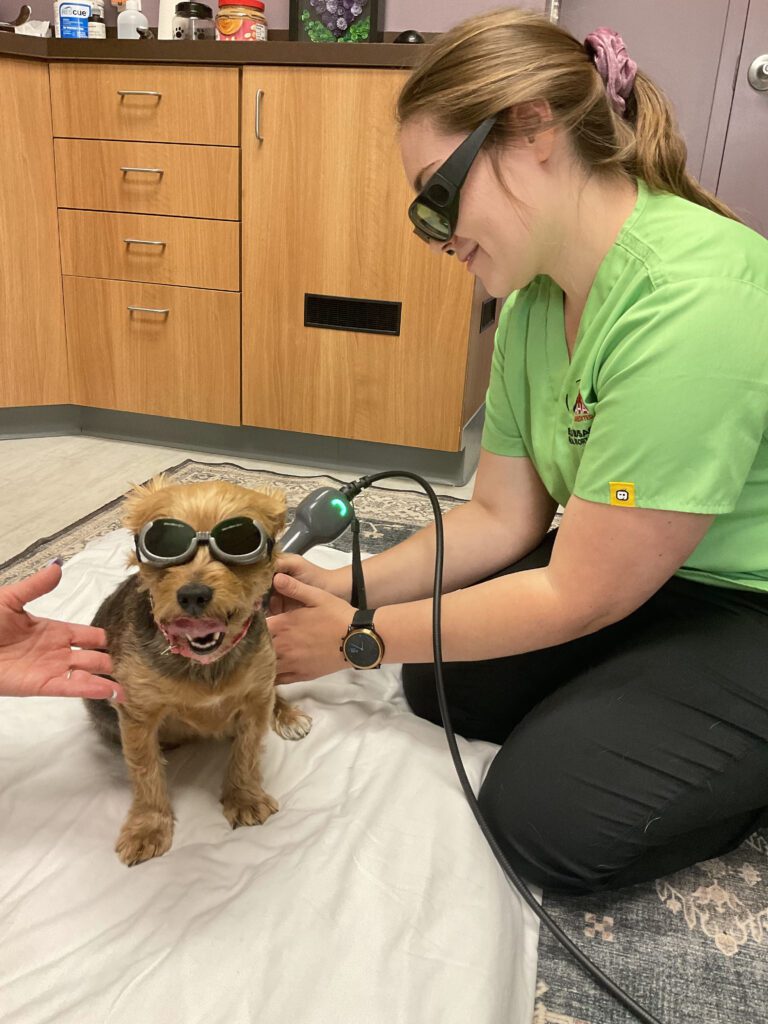
A therapeutic laser uses focused light to ease pain and inflammation and support tissue repair, which makes it useful for arthritis, injuries, and surgical incisions. During treatment, a handheld wand moves slowly over the sore area, creating a gentle warmth that many pets find relaxing.
Everyone in the room, including the patient, wears protective goggles.
Massage Therapy
Massage relaxes tight muscles, improves circulation, and eases the tension that builds up when a pet favors one side of their body. It also helps pets settle in and feel comfortable during their session.
Therapeutic Exercise
Guided exercises rebuild strength, balance, and flexibility in a controlled way. These might include weight shifting, gentle stretching, or stepping over low obstacles. The goal is steady progress without overloading healing tissue.
Mobility Support With a Pet Wheelchair
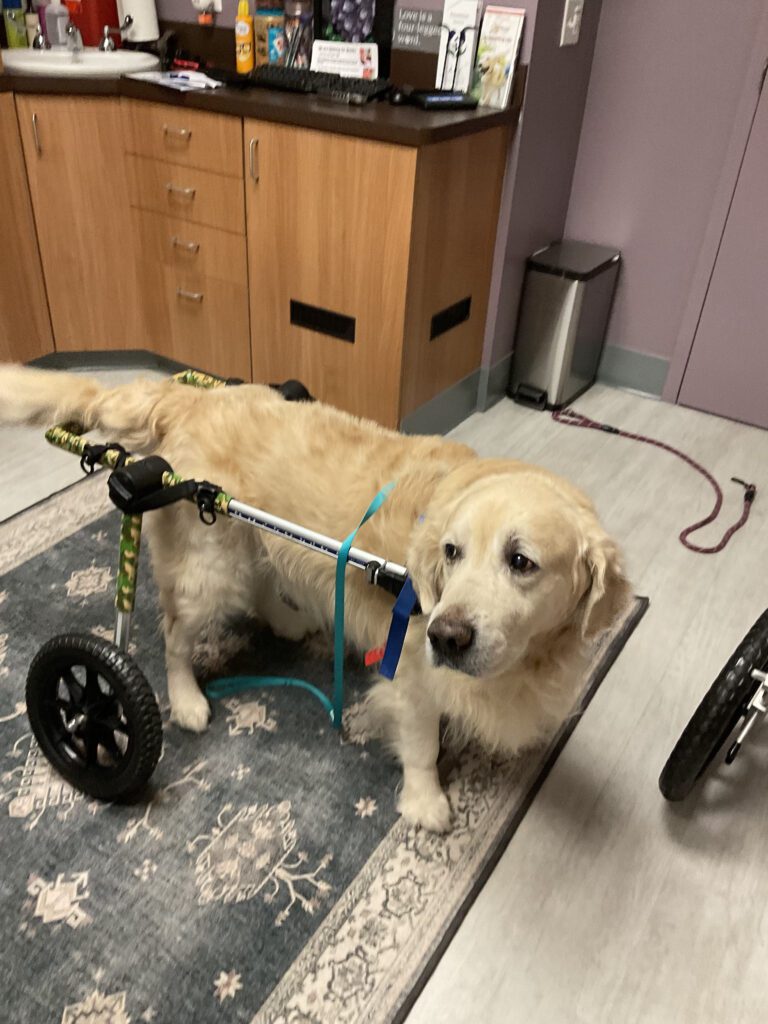
Some pets need extra help staying active while they recover, or for the long term. A Walkin’ Wheels® dog wheelchair supports pets with hind-end weakness, paralysis, or advanced arthritis so they can walk, play, and go potty more independently.
Proper fit matters, so a trained professional should measure and adjust the wheelchair for your pet.
Your Role in Your Pet’s Recovery at Home
The progress your pet makes during sessions depends heavily on what happens between them. Your rehab team will likely send you home with simple instructions, and following them closely makes a real difference.
A few ways to support recovery at home:
- Practice any home exercises exactly as shown
- Follow activity limits, even when your pet seems ready for more
- Add rugs or runners to slippery floors for better traction
- Use ramps or pet steps instead of letting them jump
- Keep your pet at a healthy weight to reduce strain on their joints
Keep an eye out for setbacks, too. Sudden limping, swelling, crying out, or refusing to put weight on a leg are all reasons to call your veterinarian. Knowing the signs your pet needs urgent care helps you act quickly if something changes.
Long after rehab ends, routine wellness exams give your veterinarian a chance to catch early signs of stiffness or muscle loss before they become bigger problems.
Frequently Asked Questions About Pet Rehab
How Long Does Pet Rehab Take?
It depends on the condition. Recovery after surgery often follows a plan lasting several weeks, with sessions becoming less frequent as your pet improves. Chronic conditions like arthritis may call for ongoing maintenance visits to keep pain under control.
Can Cats Do Physical Rehab?
Yes. Cats often respond well to laser therapy and gentle massage, and many relax during treatment. Sessions move at the cat’s pace, with breaks whenever they need them. For more on keeping your feline comfortable and healthy, browse these cat health resources.
Explore Physical Rehabilitation at an Animal Hospital in Parma, OH
Whether your pet is bouncing back from surgery or slowing down with age, rehab can help them move with more comfort and confidence. At Bartels Busack Pet Hospital Resort & Spa, our C.A.R.E. program builds a personalized plan for each patient using laser therapy, massage therapy, and therapeutic exercise. Our Walkin’ Pets–certified technician can also measure and fit your pet for a Walkin’ Wheels wheelchair.
We’ve been caring for Cleveland-area pets since 1975, and we’d love to help yours feel like themselves again. Contact our team to ask about rehab or schedule an evaluation.


